
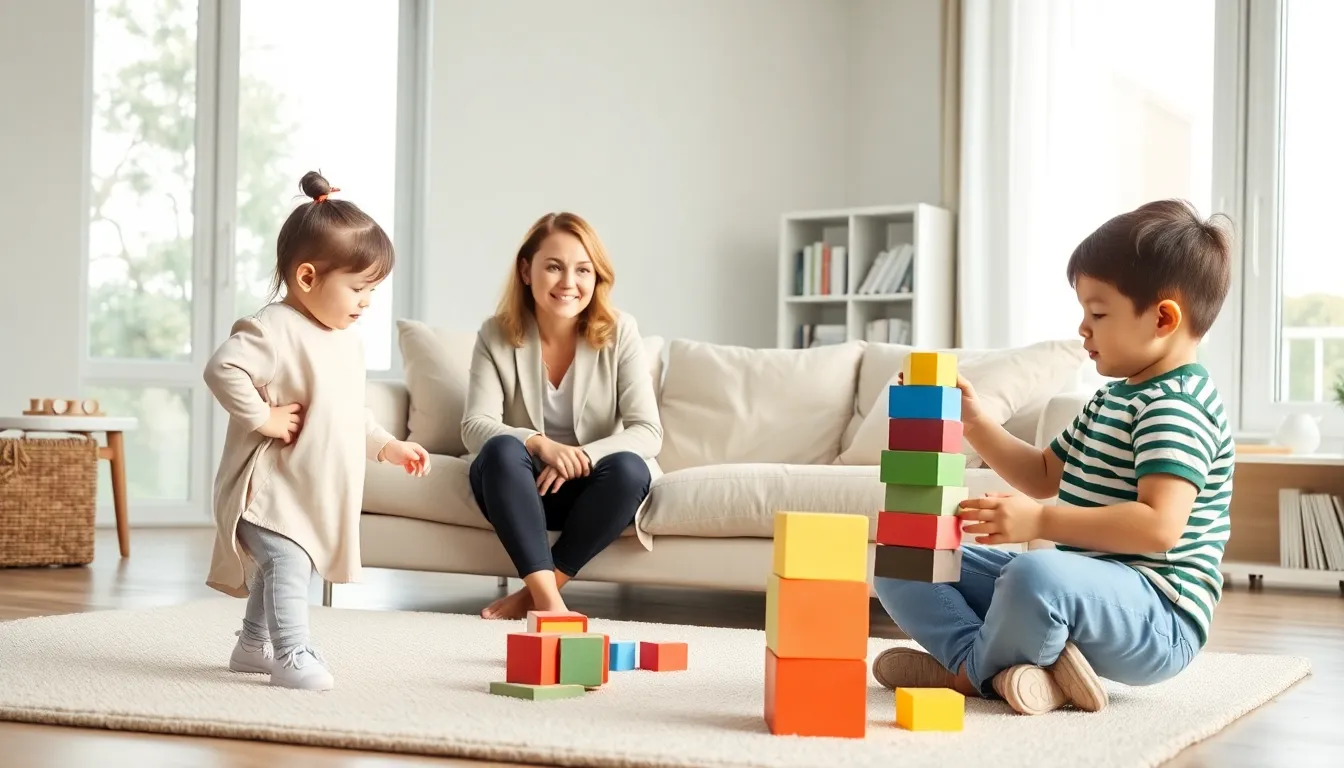
Toddlers vs preschoolers, what’s the real difference? Parents often use these terms interchangeably, but each stage brings distinct developmental changes. Toddlers typically range from ages 1 to 3, while preschoolers fall between 3 and 5 years old. Understanding these differences helps parents set realistic expectations and provide the right support. This guide breaks down the key milestones, behaviors, and parenting approaches for toddlers vs preschoolers. Whether a child just started walking or is preparing for kindergarten, knowing what to expect makes parenting smoother and more rewarding.
Table of Contents
ToggleKey Takeaways
- Toddlers (ages 1–3) rely heavily on caregivers, while preschoolers (ages 3–5) show greater independence in self-care tasks like dressing and toileting.
- Toddlers vs preschoolers differ significantly in play styles—toddlers engage in parallel play, whereas preschoolers participate in cooperative play and form friendships.
- Emotional regulation develops over time; toddlers experience intense emotions and frequent tantrums, while preschoolers begin using words to express their feelings.
- Fine and gross motor skills advance noticeably between stages—preschoolers can hop, catch balls, and hold pencils with a tripod grip.
- Parenting toddlers works best with routines and redirection, while preschoolers respond better to explanations, reasoning, and natural consequences.
- Understanding the differences between toddlers vs preschoolers helps parents set realistic expectations and provide developmentally appropriate support.
Understanding Toddler Development Stages
Toddlerhood spans from approximately 12 months to 36 months. This period marks rapid physical and mental growth. Toddlers learn to walk, run, and climb during this stage. They develop basic language skills, often speaking their first words around 12 months and forming simple sentences by age 2.
Toddlers vs preschoolers show clear differences in independence levels. Toddlers rely heavily on caregivers for basic needs. They need help with eating, dressing, and using the bathroom. Their motor skills are still developing, so they may struggle with tasks like holding a spoon or stacking blocks.
Emotionally, toddlers experience intense feelings but lack the words to express them. This leads to frequent tantrums and meltdowns. They live in the present moment and have difficulty understanding concepts like waiting or sharing. Object permanence, the understanding that things exist even when out of sight, fully develops during this stage.
Socially, toddlers engage in parallel play. They play alongside other children but rarely interact directly with them. They show attachment to specific caregivers and may experience separation anxiety. These behaviors are normal parts of toddler development.
What Defines the Preschool Years
The preschool years cover ages 3 to 5. Children at this stage show significant advances in language, social skills, and self-sufficiency. Preschoolers speak in complete sentences and ask endless questions. Their vocabulary expands rapidly, often reaching 1,000 to 2,000 words by age 4.
When comparing toddlers vs preschoolers, independence stands out as a major difference. Preschoolers can dress themselves, use the toilet independently, and follow multi-step instructions. They take pride in doing things “by myself” and actively seek opportunities to demonstrate their abilities.
Preschoolers develop imagination and engage in pretend play. They create elaborate scenarios with toys, assign roles to playmates, and build fantasy worlds. This imaginative capacity supports cognitive development and problem-solving skills.
Social interactions shift dramatically during the preschool years. Children begin cooperative play, where they work together on activities and share materials. They form friendships based on shared interests and start understanding basic social rules. Preschoolers also develop empathy and can recognize when others feel sad or happy.
Physical and Cognitive Milestones Compared
Physical development differs significantly between toddlers vs preschoolers. Toddlers master gross motor skills first, walking, running, and jumping. Their movements appear clumsy and uncoordinated. By contrast, preschoolers move with more control and balance. They can hop on one foot, catch a ball, and ride a tricycle.
Fine motor skills also progress with age. Toddlers grasp crayons with their whole fist and make random scribbles. Preschoolers hold writing tools with a tripod grip and draw recognizable shapes. They can cut with scissors, button shirts, and build complex structures with blocks.
Cognitive differences between toddlers vs preschoolers are equally striking. Toddlers learn through exploration and sensory experiences. They touch, taste, and examine everything around them. Preschoolers add symbolic thinking to their toolkit. They understand that letters represent sounds and that numbers represent quantities.
Memory and attention span expand during the preschool years. Toddlers focus on activities for only a few minutes at a time. Preschoolers can concentrate for 15 to 20 minutes on engaging tasks. They remember events from weeks ago and can retell simple stories in sequence.
Problem-solving abilities grow as well. Toddlers use trial and error to figure things out. Preschoolers apply logic and prior knowledge to solve problems. They ask “why” questions to understand how the world works.
Behavioral and Emotional Differences
Emotional regulation changes dramatically from toddlers vs preschoolers. Toddlers experience emotions intensely and express them immediately. A minor frustration can trigger a full tantrum. They lack the brain development needed to control these impulses.
Preschoolers begin developing emotional regulation skills. They can wait short periods for things they want. They start using words to express feelings instead of screaming or hitting. But, preschoolers still need adult guidance to manage strong emotions.
Behavioral patterns shift between these stages. Toddlers test boundaries constantly. They say “no” frequently and resist directions. This behavior reflects their growing sense of self, not defiance. Preschoolers understand rules better and can follow them when motivated. They respond to reasoning and explanations.
Fear responses differ between toddlers vs preschoolers. Toddlers fear loud noises, strangers, and separation from parents. Preschoolers develop more imaginative fears, monsters, the dark, or bad dreams. These fears reflect their growing cognitive abilities and active imaginations.
Social behavior evolves too. Toddlers grab toys from others without understanding the impact. Preschoolers grasp concepts of fairness and sharing, though they still need reminders. They care about peer approval and want other children to like them.
Parenting Strategies for Each Stage
Effective parenting looks different for toddlers vs preschoolers. Each stage requires specific approaches that match the child’s developmental level.
For toddlers, consistency and routine provide security. Predictable schedules reduce anxiety and tantrums. Simple language works best, short sentences and clear instructions. Offering limited choices (“red shirt or blue shirt?”) gives toddlers some control while preventing overwhelm.
Redirection serves as a primary discipline tool for toddlers. Instead of saying “no” repeatedly, parents can guide toddlers toward acceptable activities. Childproofing the environment reduces conflicts by removing temptations.
Parenting preschoolers requires different strategies. Explanations and reasoning become more effective. Preschoolers can understand why rules exist and remember them. Natural consequences teach lessons effectively at this age.
Preschoolers benefit from increased independence. Letting them make age-appropriate decisions builds confidence. Assigning simple chores teaches responsibility. Encouraging problem-solving instead of immediately fixing things develops critical thinking.
Both toddlers vs preschoolers need abundant positive attention. Praising specific behaviors reinforces good choices. Quality one-on-one time strengthens the parent-child bond at every age. Reading together, playing games, and having conversations create lasting connections.


